


How to Start a Coffee Subscription: A Step-by-Step Plan
Last Updated: October 31, 2026
Quick Summary
To start a coffee subscription, choose one subscription model and one starting coffee, set a price that covers your per-shipment costs, and set up subscription software that handles billing, pausing, and cancellation. Then run a small test launch with a limited group of subscribers and track how many stay past their first few shipments. Keep the first launch small.
- Offer one or two plans at first, such as a fixed blend or a rotating single-origin plan.
- Price from a per-shipment cost stack, including green coffee, packaging, labor, shipping, and fees.
- Offer at least two delivery intervals, such as every two weeks and every four weeks.
- Choose software that handles failed-payment recovery and lets subscribers self-serve.
- Track first-60-day cancellation rate, since churn decides whether a coffee subscription works.
Table of Contents
- What a Coffee Subscription Business Involves
- Choosing Your Subscription Model and Coffee Plans
- Setting Coffee Subscription Pricing and Unit Economics
- Setting Coffee Subscription Delivery Frequency
- Sourcing, Roasting, and Fulfillment for Freshness
- Selecting Coffee Subscription Management Software
- Validating Your Launch and Keeping Subscribers
- Launching Your First Coffee Subscription This Month
- Frequently Asked Questions
What a Coffee Subscription Business Involves
A coffee subscription business sends customers coffee on a recurring schedule, weekly, biweekly, or monthly. Customers pay automatically, and the business handles sourcing, roasting, packing, and delivery.
Shamballa Caffe sells premium, freshly roasted coffee and tea, plus branded apparel and accessories.
Plan for five core areas:
- Product selection: Which coffees you offer and how they rotate
- Pricing: What each shipment costs you and what you charge
- Fulfillment: Roasting, packing, and shipping on schedule
- Software: The platform that handles billing and customer accounts
- Retention: Keeping subscribers past their first few orders
A common mistake is treating the subscription as a side feature. It is a different business from selling bags off a shelf.
Choosing Your Subscription Model and Coffee Plans
The first decision is how the subscription is structured.
Fixed plans are simple to run and easy to forecast. Rotating plans showcase new origins but require more sourcing work.
Shamballa Caffe already offers a useful starting point for a discovery-style plan. The Single Origin Favorites Sample Pack includes six origins at 2 oz each, priced at $24.99.

Consider these plan types:
- Single-origin rotation: One featured origin each month, sold in 12 oz or 16 oz bags
- Blend subscription: Your house blend, delivered on a fixed schedule
- Sampler subscription: A mixed pack that changes each shipment
Start with one or two plans. Too many options early makes forecasting and inventory much harder.
Setting Coffee Subscription Pricing and Unit Economics
Pricing a subscription is not the same as pricing a bag on a shelf. A subscription has to cover costs on every shipment, absorb customers who cancel after one or two boxes, and still leave a contribution margin that funds acquisition and overhead. Most new operators underprice because they calculate cost per bag but never cost per subscriber.
Build a per-shipment cost stack
Start with the fully loaded cost of one shipment, not one bag. A 12 oz bag of roasted coffee begins as roughly 16 oz of green coffee, because beans lose about 12-20% of their weight during roasting. Your green coffee cost per sold bag is therefore higher than the per-pound price you paid.
Work through each line for a single 12 oz shipment:
- Green coffee: the cost of the beans you source for each shipment.
- Packaging: the bag, label, and any insert for each shipment.
- Pick-and-pack labor: assign an hourly cost to the time spent packing each order.
- Shipping: the cost of getting each shipment to the customer.
- Payment processing: the fees your payment provider charges on each transaction.
Run a sample contribution margin
Here is a realistic example for a $25 monthly 12 oz shipment:
| Line | Amount |
|---|---|
| Subscription price | $25.00 |
| Green coffee (12 oz roasted) | -$3.97 |
| Packaging | -$1.00 |
| Pick-and-pack labor | -$2.50 |
| Shipping | -$7.00 |
| Payment processing (2.9% + $0.30) | -$1.03 |
| Platform fee (2%) | -$0.50 |
| Contribution margin | $9.00 (36%) |
That $9.00 has to cover customer acquisition, overhead, and profit. If you spend $27 to acquire a subscriber through paid ads, that subscriber must stay at least three shipments just to break even on acquisition. This is why churn, not price, decides whether a coffee subscription works.
Factor in churn before you celebrate a margin
Contribution margin per shipment is only half the equation. Multiply it by average shipments per subscriber to estimate subscriber lifetime value (LTV), and compare that with what each subscriber costs to acquire.
Track your first-60-day cancellation rate from day one, and fix onboarding and first-shipment quality if it runs high before spending more on ads.
Small orders are where subscriptions can lose money, because shipping and processing costs take a larger share of a small order. Either set a minimum order value, bundle two bags per shipment, or price shipping separately rather than absorbing it.
Set price with a target margin, not a gut feeling
Work backward from a target contribution margin and adjust the levers: bag size, shipment frequency, shipping charged versus included, and packaging cost. Test two or three price points with a small group before launch.
Shamballa Caffe's sample packs offer a reference point for sample-size pricing: the Best Sellers Sample Pack and the Single Origin Favorites Sample Pack are each priced at $24.99 for six 2 oz samples.

Setting Coffee Subscription Delivery Frequency
Delivery frequency affects both customer satisfaction and your cash flow. Most subscribers pick a schedule that matches how fast they drink coffee.
Offer at least two intervals, such as every two weeks and every four weeks. Let subscribers change their schedule without canceling. Flexibility reduces churn, which is the rate at which subscribers leave.
Keep freshness in mind. Coffee tastes best within a few weeks of roasting.
Single Origin Favorites Sample Pack →
Watch out: If you ship too often for slow drinkers, they skip payments or cancel. If you ship too rarely, fast drinkers run out and look elsewhere.
Sourcing, Roasting, and Fulfillment for Freshness
Freshness is the main selling point of a coffee subscription, so your operations need to protect it.
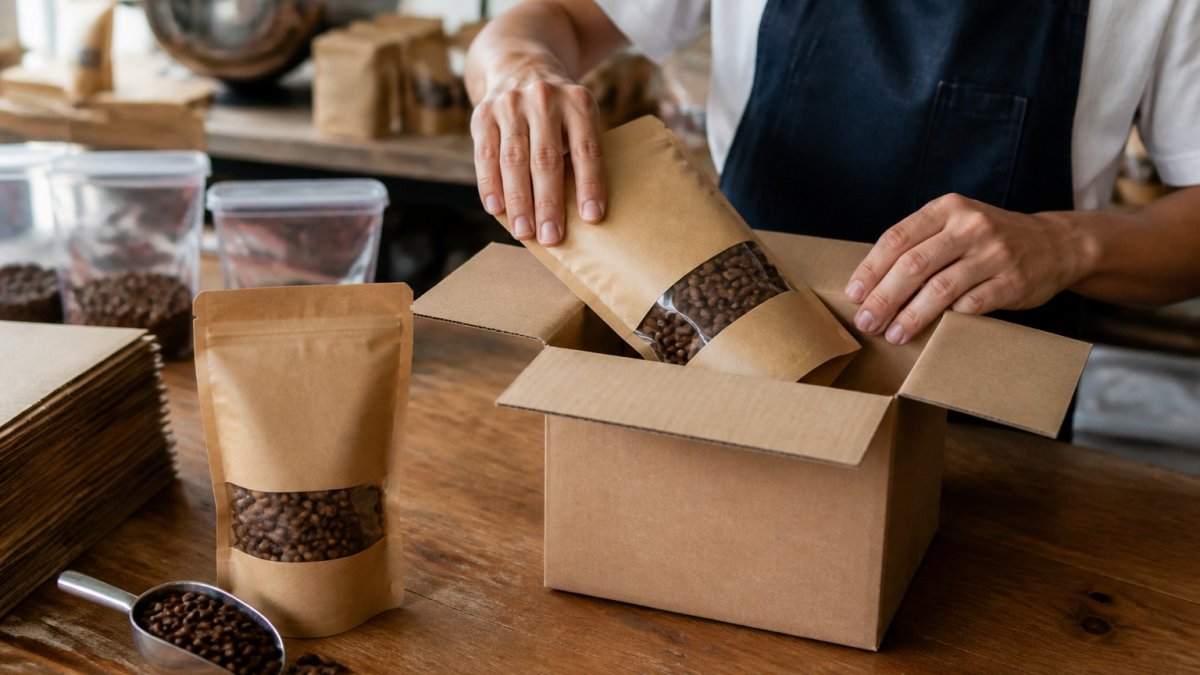
Good sourcing matters just as much. Choose green coffee suppliers who can document origin, processing method, and quality grade.
Packing should be simple and consistent. Use bags with a one-way valve so the coffee can release gas without letting in air.
Shamballa Caffe's Flavored Coffees Sample Pack is a six-pack of 2 oz samples priced at $24.99.

Selecting Coffee Subscription Management Software
Subscription software is the operational backbone of the business. It owns recurring billing, customer accounts, pause and skip logic, dunning (retrying failed payments), tax calculation, and the handoff to your shipping workflow. Choosing it badly shows up as failed charges, angry emails, and manual reconciliation. Choosing it well means subscribers can self-serve and you can see churn in a dashboard.
Understand the three platform categories
Most coffee subscriptions run on one of three setups:
- Native subscription apps on an existing storefront. If you already sell on Shopify, WooCommerce, or BigCommerce, a subscription app bolts recurring billing onto the same catalog and checkout. This is the fastest path for an existing store because products, inventory, and customer accounts stay in one place. Apps in this category typically charge a monthly base fee plus a percentage of subscription revenue, and the percentage is the line that grows with you.
- All-in-one subscription platforms. These host the storefront, billing, and customer portal together. They reduce integration work but can limit how much you customize product pages and branding.
- Standalone recurring-billing and billing-management tools. These handle charges and dunning but leave the storefront and fulfillment to other systems. They suit operators who already have a store and only need the billing layer.
For a business that already sells one-time products, a native subscription app is often the least disruptive route, because the subscription lives beside existing products rather than in a separate system.
Compare on the mechanics that actually break
Feature lists look similar across platforms. The differences show up in edge cases. Evaluate each candidate on:
- Failed-payment recovery (dunning). When a card expires or is declined, does the platform retry automatically, email the customer a secure update link, and pause the subscription after a set number of attempts? Without this, involuntary churn quietly erodes revenue.
- Customer self-service. Can subscribers pause, skip a shipment, swap a product, change frequency, and update a card without emailing you? Every support ticket you avoid is margin recovered.
- Proration and billing-date logic. If a customer changes frequency mid-cycle, does the platform prorate correctly, or does it double-charge or skip a charge? Test this with a sandbox order.
- Tax handling. Subscription software should calculate sales tax by jurisdiction and, where required, integrate with a tax engine. Taxability can differ by product type and jurisdiction, so confirm the rules for the places you ship to rather than assuming.
- Shipping integration. The platform should push orders to your shipping tool with the right weight and service level, and ideally print labels in batch.
Run a full test cycle before launch: create a test subscriber, let one charge succeed, force a failed payment, update the card, pause the subscription, skip a shipment, change frequency, and cancel. If any step requires you to intervene manually, you have found your first support burden.
Plan the payment and accounting handoff
Recurring revenue creates bookkeeping work that one-time sales do not. Decide up front how subscription revenue, refunds, and failed charges will reconcile in your accounting software.
Also confirm how the platform handles refunds and chargebacks. A subscriber who cancels mid-cycle may be owed a prorated refund depending on your terms; state your refund policy clearly at signup so disputes are rare.
Match the platform to your launch size
A first launch with 25-100 subscribers does not need enterprise billing. Prioritize a platform that integrates with your existing store, handles dunning, and gives customers self-service. Add advanced features, gift subscriptions, prepaid plans, referral programs, once you have retention data and know which levers move churn. The cost of switching platforms later is real, so choose one whose pricing model still works at 500 subscribers, not just at 50.
Validating Your Launch and Keeping Subscribers
A small test launch shows you what works before you commit to inventory.
Focus on retention. Subscribers who stay for several months are worth far more than those who cancel after one box.
Useful metrics to track:
- Active subscribers each month
- Cancellation rate in the first 60 days
- Average number of shipments per subscriber
- Reasons customers give for pausing or canceling
A common approach is to offer a discovery sampler first, then move satisfied customers into a regular plan. This gives you real preference data before you lock in your product lineup.
Launching Your First Coffee Subscription This Month
Start with a simple, steps-based plan you can finish in 30 days:
- Week 1: Choose one subscription model and one starting coffee. Set your price using the cost checklist above.
- Week 2: Set up your subscription platform and test billing, pause, and cancel flows with test orders.
- Week 3: Source a small batch of beans, roast, and pack a test shipment for friends or early customers.
- Week 4: Open sign-ups to a limited group, ship your first deliveries, and collect feedback.
Keep the first launch small. You can add plans, origins, and delivery options once you know your costs and what subscribers want.
Frequently Asked Questions
How do I start a coffee subscription business?
Start by defining your customer, then choose a subscription model such as fixed boxes, rotating single-origin selections, or a build-your-own plan. Source beans from a roaster or roast in-house, set prices that cover product, packaging, shipping, and platform fees, and select a subscription management platform that handles recurring billing and pausing. Test with a small group of subscribers before a full launch, and track churn from the first month so you can adjust pricing and delivery frequency based on real behavior.
How much should I charge for a coffee subscription?
Price from your real costs first: green or roasted coffee, bag and label, shipping, payment processing fees, and software. Then set a subscription price that leaves margin after those costs. Many subscriptions offer a small discount compared with one-time purchases to encourage commitment. Shamballa Caffe's Single Origin Favorites Sample Pack, for example, is priced at $24.99 for six 2 oz samples.
How often should coffee subscriptions be delivered?
Most coffee subscriptions deliver every two to four weeks, since whole bean coffee tastes best within a few weeks of its roast date. Offer a choice of frequencies so customers can match deliveries to how much they drink, and let them skip or pause a shipment without canceling. Track which frequency retains subscribers longest, because the best schedule is the one customers keep renewing.
What platform can I use to manage coffee subscriptions?
A subscription management platform should handle recurring billing, customer self-service for changing frequency or pausing, and inventory sync with your fulfillment process. Check whether it supports your ecommerce store, sends failed-payment reminders, and exports customer data so you can analyze retention. Compare total monthly fees against your order volume before committing, since per-transaction costs add up quickly at scale.
